Nature Aquarium
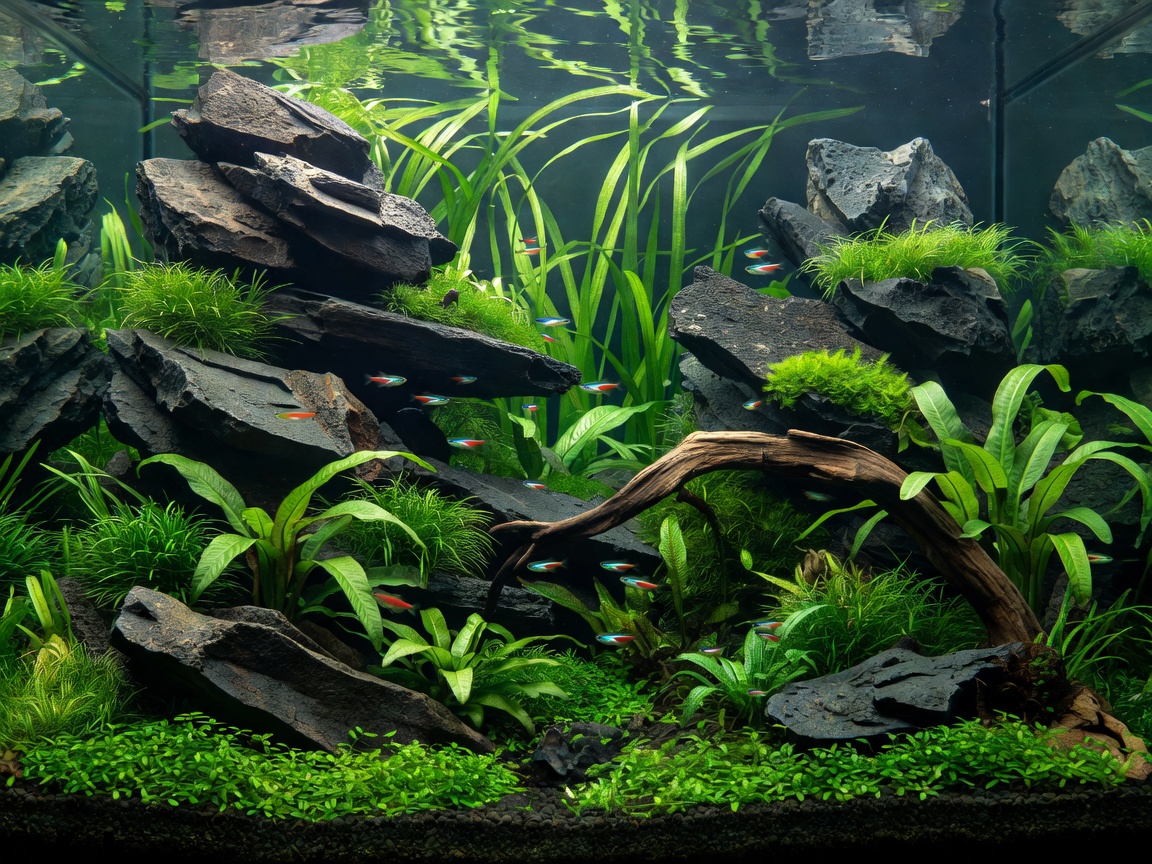
Popularised by Takashi Amano and Aqua Design Amano, this style recreates natural scenes — forests, hillsides, riverbanks — with wood, stone and dense, naturalistic planting.
Aquascaping & aquatic plants
Stones, wood and plants arranged with intention — and a builder to sketch your own layout before you get your hands wet.
Nature-inspired styles
Popularised by Takashi Amano and Aqua Design Amano, this style recreates natural scenes — forests, hillsides, riverbanks — with wood, stone and dense, naturalistic planting.
A minimalist rock arrangement, usually an odd number of stones with one dominant main stone, set in a low carpet of one or few plant species. Explore the illustrative Iwagumi profile.
A garden-like composition of colourful stem plants arranged in terraces and “streets”, with little or no hardscape. Requires frequent, precise trimming.
Wild, overgrown and forgiving: large-leaved plants, floating cover and roots, often with lower light and a relaxed trimming schedule.
Rock & driftwood
Planting zones
Foreground: low carpets and small rosettes such as Monte Carlo. Midground: epiphytes on wood or stone (Java fern, Anubias, mosses) and medium rosettes. Background: tall stem plants and large-leaved species that frame the scene and hide equipment.
Leave negative space — open sand or water — so the composition, and the fish, can breathe.
Aquatic plant profiles
Low, spreading foreground plants such as Micranthemum ‘Monte Carlo’. Most form dense carpets more reliably with good light, nutrient-rich substrate and CO₂ injection.
Mosses such as Java moss (commonly sold as Taxiphyllum barbieri) attach to wood and stone, tolerate low light and provide shelter for fry and shrimp. Trim regularly to prevent debris build-up.
Fast-growing background plants like Rotala rotundifolia. They absorb nutrients quickly, helping out-compete algae. Propagate by cutting tops and replanting.
Species such as Amazon frogbit (Limnobium laevigatum) shade the tank and soak up nitrate. Several floating plants are invasive in some regions — never discard them in drains or waterways, and check local regulations. Keep part of the surface clear for labyrinth fish like bettas.
Nutrient soils (aqua soils) feed root-heavy plants and often soften water; inert sand or gravel is stable and works with root tabs. Many layouts use soil under a sand foreground strip.
Light drives growth; nutrients (nitrogen, phosphorus, potassium, iron and micro-elements) and CO₂ must keep pace. Imbalance — especially excess light — is a common cause of algae.
Pressurised CO₂ boosts growth for demanding plants but must be introduced gradually and monitored, as excess CO₂ can harm fish. Use a drop checker and turn CO₂ off at night via a solenoid timer.
Trim stem plants above a leaf node and replant healthy tops; remove yellowing leaves at the base; thin carpets before they lift from the substrate; and siphon debris after each trim. Little and often keeps a layout balanced.
Interactive
Pick a tank shape, hardscape and plant categories. The preview updates instantly. This is a visual planning aid — not a biological compatibility assessment.
Photography & inspiration
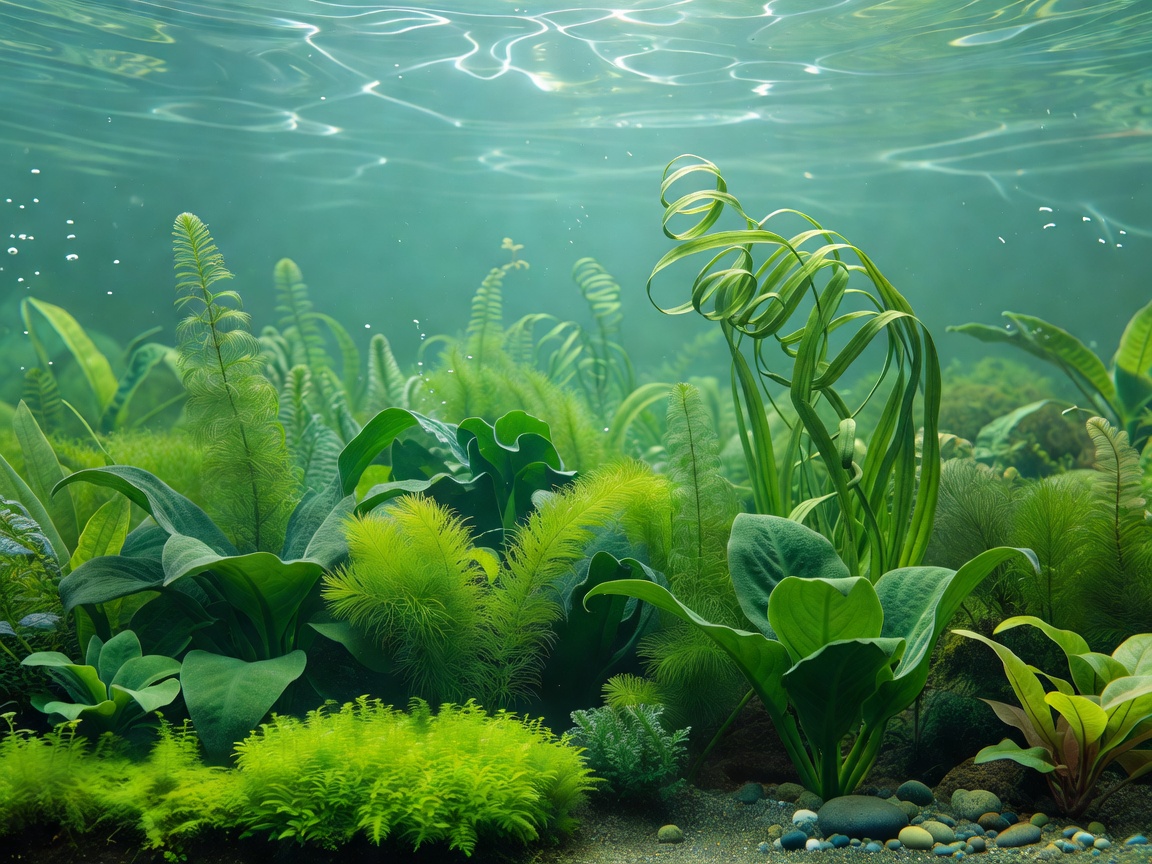
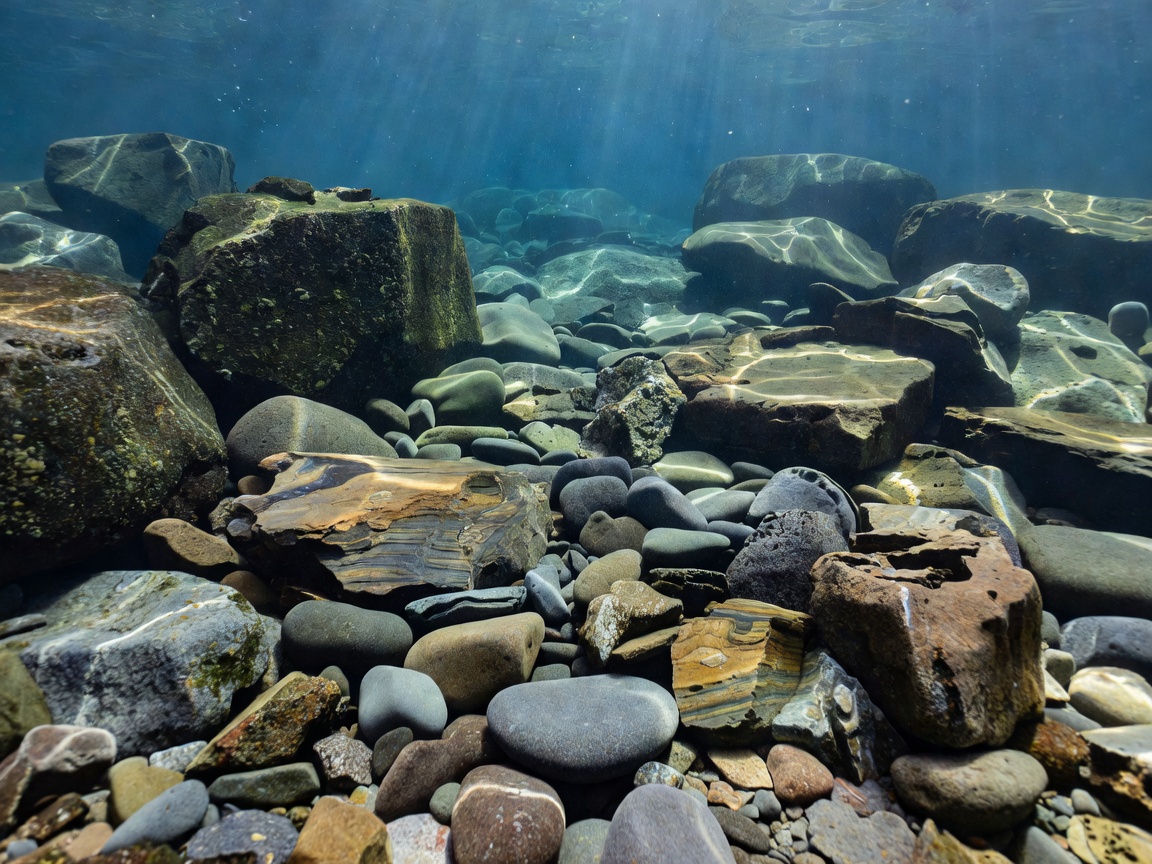
Illustrative photographs from Unsplash; they are not verified as specific aquascapes, species or products.
Saved inspiration